In the enigmatic and haunting universe of the Bioshock franchise, Rapture stands as a monument to both brilliance and hubris. Architected by the visionary yet tyrannical Andrew Ryan, Rapture was supposed to be a sanctuary, a city carved beneath the ocean waves where innovation and freedom from the dictatorships of the terrestrial world could thrive. Yet, despite its unbridled spirit of autonomy and self-governance, Rapture paradoxically includes within its utopian complex a very terrestrial relic: a prison.
Given the foundational philosophies of Rapture, the existence of a prison appears contradictory. Ryan’s underwater metropolis was envisioned as an escape from the constraints of government and societal norms, encouraging individual greatness and providing refuge for those who sought a life unhampered by external control. So, why then was there a need to confine some of its inhabitants?
In examining the need for a prison in Rapture, one must first consider the inherent imperfections in the city’s guiding principles. While Rapture was a beacon for those yearning to live free of “parasites” and government hand-holding, it did not rid its inhabitants of human nature’s more sinister inclinations. The ambition and creativity encouraged within Rapture could quickly morph into greed and depravity without any checks and balances—qualities that were perhaps underestimated in Ryan’s grand design.
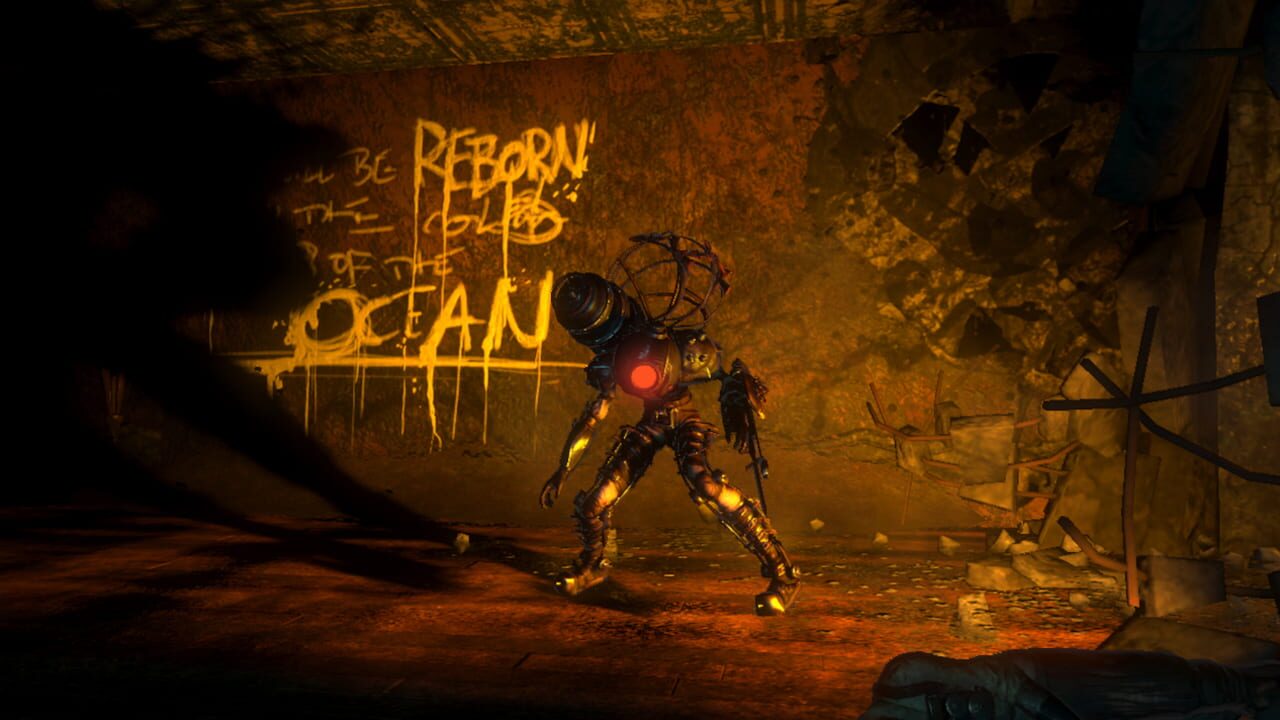
The purpose of Rapture’s prison, therefore, was not merely punitive but deeply pragmatic. The underwater city was a marvel of engineering, but space was an invaluable commodity. Given the physical confinements, maintaining social order was critical to sustaining life beneath the waves. While the city supported unfettered freedom, it needed mechanisms to deal with those who disrupted the delicate balance of its ecosystem. A traditional criminal system on land might offer exile as an option, but the logistical constraints and the stakes involved in Rapture’s isolation required a solution that kept potential threats contained rather than expelled into an already scarce environment.
A closer exploration of Bioshock 2, which features an entire prison level, provides additional context to this dual necessity of order and protection. The prison served as a holding pen for those who pushed the boundaries of Ryan’s libertarian paradise too far, a reminder that even in a world claiming ultimate freedom, there exist rules that must be enforced to prevent anarchy. Its presence underscores a fundamental truth—that governance, in any form, remains incomplete without the ability to impose consequences.

The decision to detain rather than expel citizens can also be seen as a reflection on Rapture’s vulnerability. An expelled citizen could theoretically partner with surface governments or rival factions, posing a threat to the secrecy and security of the city. Thus, the prison becomes not just a tool of discipline, but one of defense against existential risks to Rapture’s society.
Furthermore, the notion of personal responsibility that permeates the ideology of Rapture implies that with great freedom comes great responsibility. The prison may have been an ironic and inconvenient necessity, yet it coexists with the belief that individuals must face consequences for their actions. In a city where the pursuit of one’s desires was held sacred, the prison marked the boundary of acceptable conduct.

Ultimately, Rapture’s prison symbolizes the inevitable contradictions within utopian visions. Though Ryan sought a society that transcended traditional governments, Rapture’s downfall was written in its struggle to reconcile this ideal with human imperfections. It reminds us that even when breaking free from the shackles of conventional governance, every society must grapple with its own mechanisms for dealing with disorder and dissent.