
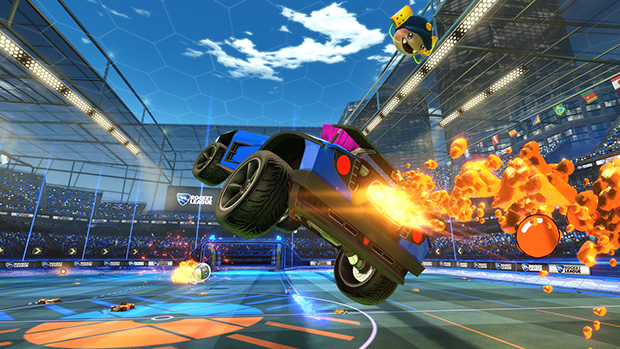
Mastering aerial control is one of the most challenging yet rewarding skills in Rocket League. As you rank up, you will inevitably face a critical decision: should you stick with the default regular air roll, or make the switch to directional air roll? This choice can shape your playstyle, mechanical ceiling, and consistency. But with so much conflicting advice out there, it is easy to feel lost. This guide will break down both methods, compare their strengths and weaknesses, and help you decide which one (or both) belongs in your controls.
We will cover exactly what each air roll type does, how they differ, and when to use them. You will also learn practical tips for learning directional air roll without destroying your muscle memory, and how top players approach the decision. By the end, you will have a clear path forward tailored to your goals and playstyle.
Understanding Air Roll Mechanics
Before choosing sides, you need to understand what each air roll input actually does. Rocket League offers two ways to rotate your car in the air: regular (also called neutral or manual) air roll, and directional (also called dedicated) air roll. They control the same axis of rotation but work differently from a button perspective.
Regular (Neutral) Air Roll
Regular air roll is bound to a single button by default (often on a controller’s left bumper). While you hold this button, moving the left stick left or right will roll your car in that direction. Releasing the button returns the stick to steering. In other words, it temporarily remaps your steering input to air roll. This method gives you full analogue control of the roll speed and direction, because you can tilt the stick slightly for slow rolls or all the way for fast rolls. It is intuitive for many players coming from driving games, since it shares the same stick movement as ground steering.
Directional Air Roll
Directional air roll is a dedicated input that, when pressed, instantly rolls your car in one fixed direction at full speed. You can bind it to a separate button (or stick direction) for air roll left and another for air roll right. Unlike the regular version, there is no stick interaction needed; the roll happens as long as you hold the button. This means you can freely use the left stick for other adjustments (pitch and yaw) while rolling, which opens up advanced aerial techniques like tornado spinning, stalls, and more fluid air dribbles.
Key Differences and When to Use Each
The core difference lies in how your left hand (or stick hand) works. With regular air roll, your stick is always doing two jobs: it either steers on the ground or rolls in the air, depending on whether you hold the button. With directional, the stick is free for pitch and yaw at all times, and roll is handled by a separate finger. This might sound like a small difference, but it has huge implications for control, speed, and comfort.
Regular air roll excels in situations where you need precise, slow roll adjustments. For example, when recovering to land on your wheels, making minor angle changes for a shot, or when you want analogue control over how fast you rotate. Many players find it easier for half-flips and basic aerials because the motion mirrors ground steering. Directional air roll, on the other hand, shines in constant rolling scenarios like air dribbles, flip resets, and freestyling. Since it spins at a constant full speed, you can build muscle memory for how your car moves during a continuous rotation, allowing for breathtaking aerial plays that are nearly impossible with regular air roll alone.
Pros and Cons of Each Method
Regular Air Roll Advantages
- Analogue control: You can roll slowly or quickly, which is useful for subtle mid-air adjustments.
- Fewer buttons: Only one button is needed, keeping your controls simpler.
- Easier recovery: Many players find it more intuitive for landing cleanly and half-flipping.
- Familiarity: Most players start with it, so there is less of a learning curve.
Regular Air Roll Disadvantages
- Stick conflict: You cannot simultaneously roll and adjust pitch/yaw independently because the stick is occupied.
- Limited advanced mechanics: Tornado spinning, consistent air dribbles, and quick aerial turns are harder to execute.
- Slower direction changes: Switching roll direction requires moving the stick from left to right, which is slower than pressing a different button.
Directional Air Roll Advantages
- Independent stick control: You can pitch and yaw freely while rolling, enabling complex aerial motions.
- Faster inputs: Tapping a button gives instant full-speed roll; no stick travel time.
- Essential for high-level mechanics: Many advanced moves (Breezi flicks, multiple flip resets, tornado flicks) rely on directional air roll.
- Muscle memory for constant spinning: Once mastered, it provides a consistent frame of reference during aerials.
Directional Air Roll Disadvantages
- Steep learning curve: It can take dozens of hours to feel natural, and you will likely play worse during the transition.
- Requires more buttons: You need space on your controller for two extra binds (air roll left and right).
- Less precise for small adjustments: Full-speed rolling can make tiny corrections feel twitchy.
How to Decide Which to Use
There is no single correct answer for every player. Your decision should depend on your rank, ambition, and willingness to invest time. If you are a casual player or someone happy in the Platinum to Diamond range, regular air roll may be perfectly adequate. It is simpler, and you can still reach Champion and beyond with it. However, if you have aspirations to push into Grand Champion or SSL, or if you enjoy learning advanced mechanics, adding directional air roll will raise your skill ceiling significantly.
Many top players actually use both. They keep regular air roll for recoveries and precise adjustments, and one directional air roll (usually air roll left or right) for aerials. This hybrid approach gives you the best of both worlds. The key is to avoid trying to learn everything at once. If you are new to directional air roll, pick one direction (left or right) and stick with it until it feels second nature. You do not need both initially; having one is enough to unlock new mechanics.
Learning Directional Air Roll Without Losing Your Mind
Making the switch can be brutal. Your brain is used to the regular air roll logic, and you will probably flail wildly at first. Here is a structured approach to ease the transition.
- Start by binding air roll left or right to a comfortable button (many use L1/LB for air roll left or R1/RB for air roll right) while keeping your regular air roll bound as well.
- Spend time in Freeplay just hovering and trying to roll while adjusting your car’s nose. Do not worry about hitting the ball yet; just learn how the car reacts.
- Use aerial training packs with easy, high balls. Try to hit the ball using only directional air roll for the entire aerial. Expect to miss a lot.
- Gradually integrate it into your matches, but only in unranked or casual at first. Accept that your rank will dip temporarily.
- Focus on one specific mechanic at a time, such as air dribbling or double touches, using the new air roll. Repetition builds the neural pathways.
Common Mistakes and How to Fix Them
One common error is unbinding regular air roll completely too early. Unless you are willing to suffer through dozens of hours of complete incompetence, keep regular air roll available for recoveries and emergencies. Another mistake is trying to learn both air roll left and right simultaneously. That is a fast track to confusion. Pick one side and commit. Also, avoid the temptation to constantly switch your binds. Muscle memory requires consistency. Finally, do not compare your progress to YouTube freestylers who have thousands of hours. Focus on small, measurable improvements each session.
Frequently Asked Questions
- Can I reach Grand Champion with only regular air roll?
- Yes, absolutely. Many players have reached GC and even SSL using only regular air roll. It comes down to overall game sense, positioning, and execution. However, directional air roll makes certain mechanics easier and can give you an edge in high-level lobbies.
- Is it better to learn directional air roll on keyboard or controller?
- Both are viable. Keyboard players often bind air roll left/right to Q/E by default, which is very natural. Controllers require more creativity with binds, but the analogue stick offers smoother control. Most pros use controller, but there are high-level keyboard players as well.
- How long does it take to get comfortable with directional air roll?
- It varies wildly, but expect at least 20 to 50 hours of focused practice before it feels usable in matches. Mastering it to the level of top players can take hundreds of hours. The key is consistent, deliberate practice rather than passive playing.
- Should I use air roll left or right?
- There is no significant mechanical advantage to one over the other. Most people choose based on comfort, often matching their dominant direction (e.g., air roll right if you tend to spin clockwise). If you are unsure, go with air roll right, as it is slightly more common among pros, but either is fine.
- Can I use both regular and directional air roll together?
- Yes, and many pros do exactly that. They use regular air roll for recoveries and small adjustments, and one directional air roll for aerials. Just make sure you have enough buttons and that the binds do not conflict.
Ultimately, the air roll debate is not about a right or wrong method; it is about what fits your goals and learning style. Regular air roll is the comfortable, dependable option that can take you far. Directional air roll is the flashy, high-ceiling tool that unlocks new creative possibilities. Most competitive players eventually adopt at least one directional bind, but you can succeed without it. Take your time, experiment wisely, and remember that mechanics are only one part of Rocket League. Smart rotations and teamwork will always be the foundation of consistent wins.


