

Insomniac Games has established itself as one of PlayStation’s most accomplished studios. Its Spider-Man games understood how a superhero’s unique abilities could become the foundation for thrilling gameplay. Marvel’s Wolverine arrives with similarly extraordinary production values, but with one enormous problem: it simply isn’t much fun to play.
The voice work is fantastic, the cinematics are beautifully directed and the environments and animations are visually impressive. Yet the experience repeatedly feels more like an expensive Wolverine movie than a satisfying Wolverine game.
Spider-Man is an unusually versatile superhero. His web-swinging makes traversal entertaining in its own right, while gadgets, aerial movement, environmental manipulation and elaborate attack combinations make combat expressive. Exploration, side activities and fighting reinforce one another.
Wolverine is a different proposition. He is a blunt instrument: an aggressive, animalistic close-quarters fighter with claws, extraordinary durability and a healing factor. There is nothing inherently wrong with that. But he needed a combat system built around those strengths. Instead, the result often feels like Spider-Man’s familiar formula with the web-swinging, gadgets and varied mobility removed, without sufficient new depth to replace them.
Square, Square, Square: Combat Becomes a Chore
The central problem is the repetitive combat loop. Encounter after encounter collapses into pressing Square repeatedly, dodging, pressing Square again and occasionally using Triangle or a leap. Enemies frequently look and behave similarly, and too few situations provide a compelling reason to change tactics.
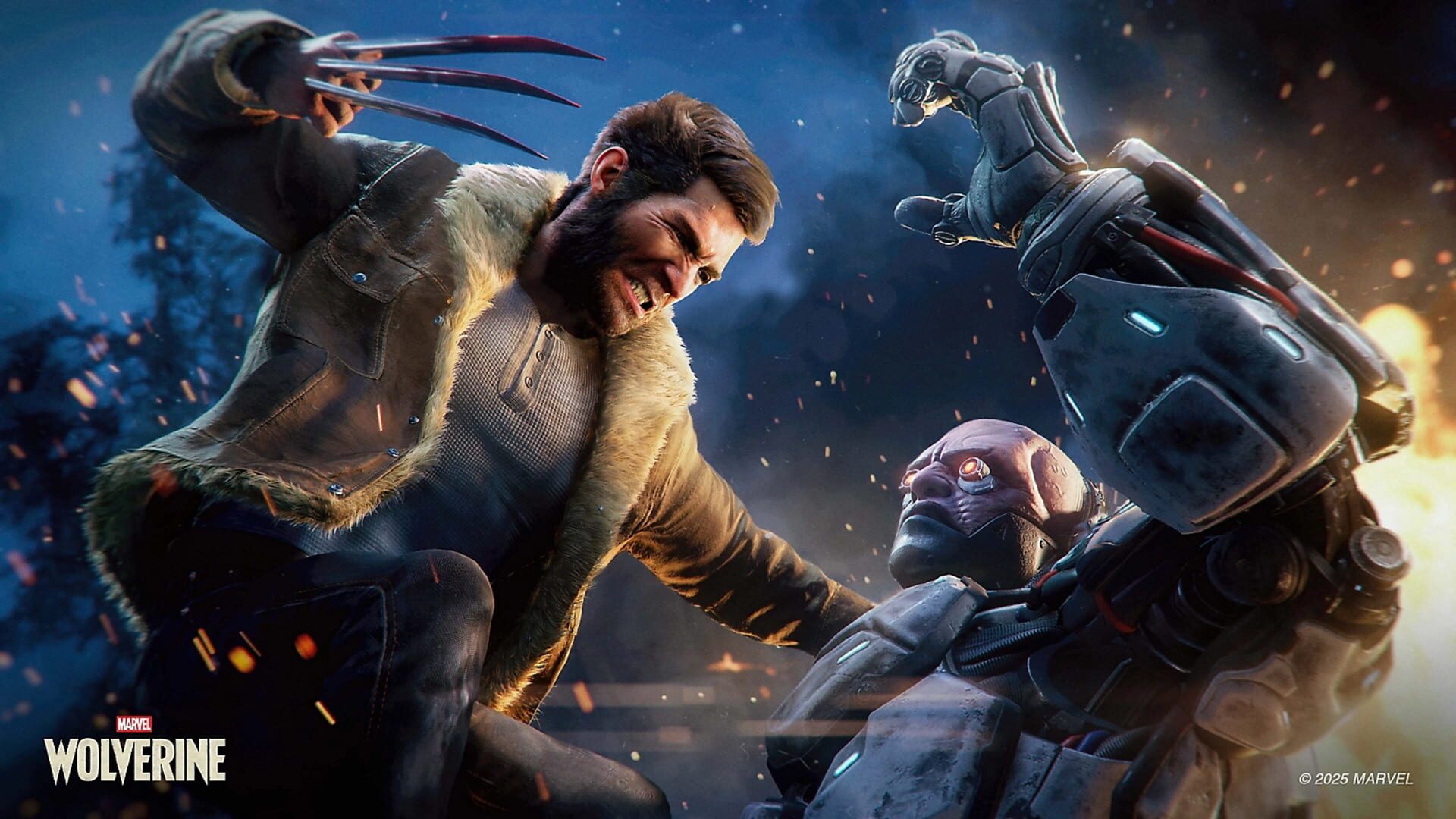
It is not enough for a game to technically offer different moves. The enemies and encounters must make those moves meaningful. A satisfying action game rewards timing, positioning, improvisation and mastery. Here, the spectacular violence becomes routine remarkably quickly. Wolverine should feel ferocious and increasingly rewarding to control; instead, the fighting too often resembles a repetitive chore.
God of War Shows What Was Possible
Kratos is also a brutally powerful, rage-driven fighter, yet Santa Monica Studio made his aggression an absolute pleasure to control. God of War builds tactical depth through combinations, parries, counters, positioning, weapon abilities and enemy encounters that reward learning.
Wolverine could have explored similarly rich mechanics without copying God of War. Claws could support targeted attacks and grappling. Regeneration could encourage calculated risk. Heightened senses could make stalking and hunting more involved. Berserker rage could reward skilled aggression. None of this requires an open world. A focused linear game with exceptional melee combat could have been extraordinary.
Both studios sit within Sony Interactive Entertainment. That does not tell us what consultation or collaboration occurred behind the scenes, but it makes the contrast particularly striking: Sony already has a compelling example of how to build deep gameplay around an overwhelmingly physical character.
When Simple Combat Also Feels Unpolished
The limitations are compounded by frustrating movement and collision interactions. During my time playing, Wolverine could catch against environmental objects, including a tree during combat, requiring awkward movement and repeated inputs to get free. Targeting and positioning could also feel imprecise, while taking damage during these moments made them particularly aggravating.
For a game so dependent on close-range attacks, basic movement, enemy targeting and collision should feel exceptionally precise. The contrast between the lavish cinematic polish and the sometimes clumsy moment-to-moment controls is difficult to overlook.
Stealth Without Enough Tools
Stealth provides occasional relief from the combat loop but feels similarly underdeveloped. Spider-Man’s stealth had mobility, gadgets and web-based environmental opportunities. Wolverine should not have those same tools, but stripping them away demands a more imaginative replacement.
Too often, the experience amounts to hiding in grass, waiting for an enemy and performing a takedown. Wolverine’s senses and predatory nature suggest an exciting hunting system, but the actual interactions rarely fulfil that promise. Stealth is sometimes more engaging than the fighting, yet seldom becomes a substantial alternative.

Beautiful to Watch, Boring to Play
The performances, visual fidelity and cinematic direction deserve genuine praise. There is obvious craftsmanship in the presentation, and the story sequences can be compelling. But what makes an exciting action film does not automatically make an exciting action game.
In a film, spectacular choreography is enough because the audience watches it unfold. In a game, the spectacle needs to emerge from interesting decisions and meaningful input. Watching Wolverine perform a brutal finisher is impressive the first few times; repeating similar animations after hours of basic attacks is far less exciting.
It is difficult not to wonder how such a major production settled on a combat loop this limited. We cannot know which concerns were raised internally or how the team balanced accessibility, cinematic presentation and mechanical depth. The finished game nevertheless raises serious questions about those priorities.
Marvel’s Wolverine is an impressive production but an underwhelming action game. Its exceptional voice acting, cinematics, visuals and presentation deserve recognition. Unfortunately, repetitive button mashing, limited enemy variety, shallow stealth and occasional movement frustrations undermine the one thing a Wolverine game most needs to get right: fighting.
Insomniac did not need to make Wolverine play like Spider-Man. It needed to find a combat philosophy suited to Wolverine, with the same commitment to depth that made Kratos so satisfying in God of War. Instead, the game too often makes one of Marvel’s fiercest fighters feel boring to control.
Review summary
Score7
Reviewed onPlayStation 5
The verdict
Marvel's Wolverine delivers spectacular cinematics, performances and visuals, but shallow, repetitive combat undermines the experience.
The good
- Excellent voice acting
- Spectacular cinematics and visuals
- High production values
The bad
- Repetitive button-mashing combat
- Limited enemy and stealth variety
- Frustrating targeting and environmental collision


