

Marvel Tōkon: Fighting Souls makes a formidable first impression. Arc System Works has taken the Marvel universe and built a 4v4 tag-team fighter around it, immediately presenting players with large teams, assists, explosive attacks and the kind of screen-filling action that can make fighting games seem impenetrable to anyone who does not regularly play them.
That initial complexity is somewhat deceptive. Tōkon is clearly interested in depth, but it is equally interested in making sure players understand the fundamentals before expecting them to engage with everything happening beneath the surface. That balance between accessibility and complexity is one of the game’s most important qualities, particularly for Marvel fans who may be arriving because of the characters rather than years of fighting-game experience.
An Excellent Tutorial Makes a Real Difference
As someone who is not particularly well versed in fighting games, the tutorial was one of the most encouraging parts of my time with Tōkon. Rather than assuming familiarity with the conventions of the genre, it works through movement, attacks and the broader combat systems in a logical progression. By the end of it, mechanics that initially looked complicated made considerably more sense.
That might sound like basic praise, but tutorials matter enormously in a genre where terminology, inputs and established conventions can quickly leave newcomers behind. Tōkon does a particularly good job of explaining what it wants from the player without turning the learning process into a wall of information. Going through the tutorial was enjoyable in its own right, and more importantly, I came away understanding how the pieces of the combat system fit together.
The 4v4 premise also becomes less intimidating once those systems are explained. A large team does not simply mean memorising four entirely separate characters before being allowed to have fun. Assists and team mechanics allow the wider roster to contribute while a player develops an understanding of the character currently in control. There is still plenty to learn, but the starting point is far more welcoming than the format initially suggests.
Accessibility Without Throwing Away Depth

Making a fighting game approachable can create its own problem. Simplify too aggressively and experienced players may quickly run out of reasons to experiment; explain too little and newcomers can bounce off before discovering why the genre has such a dedicated competitive audience. Tōkon’s design is built around trying to occupy the space between those extremes.
The fundamentals are designed to let players produce exciting results without first mastering an enormous catalogue of demanding inputs. Beyond that initial layer, team composition, assists, positioning, character combinations and more advanced offensive and defensive decisions provide room for considerably more experimentation. The result is a game that can make a newcomer feel involved relatively quickly while still being constructed around systems intended to reward players who want to dig deeper.
That accessibility will not necessarily appeal to every fighting-game veteran. Some players will naturally prefer games that demand more execution from the outset. In Tōkon, however, the lower barrier to entry feels deliberate rather than accidental. Marvel is a licence with an audience far larger than the traditional fighting-game community, and giving those players a realistic route into the genre makes sense.
The Art Direction Is Exceptional
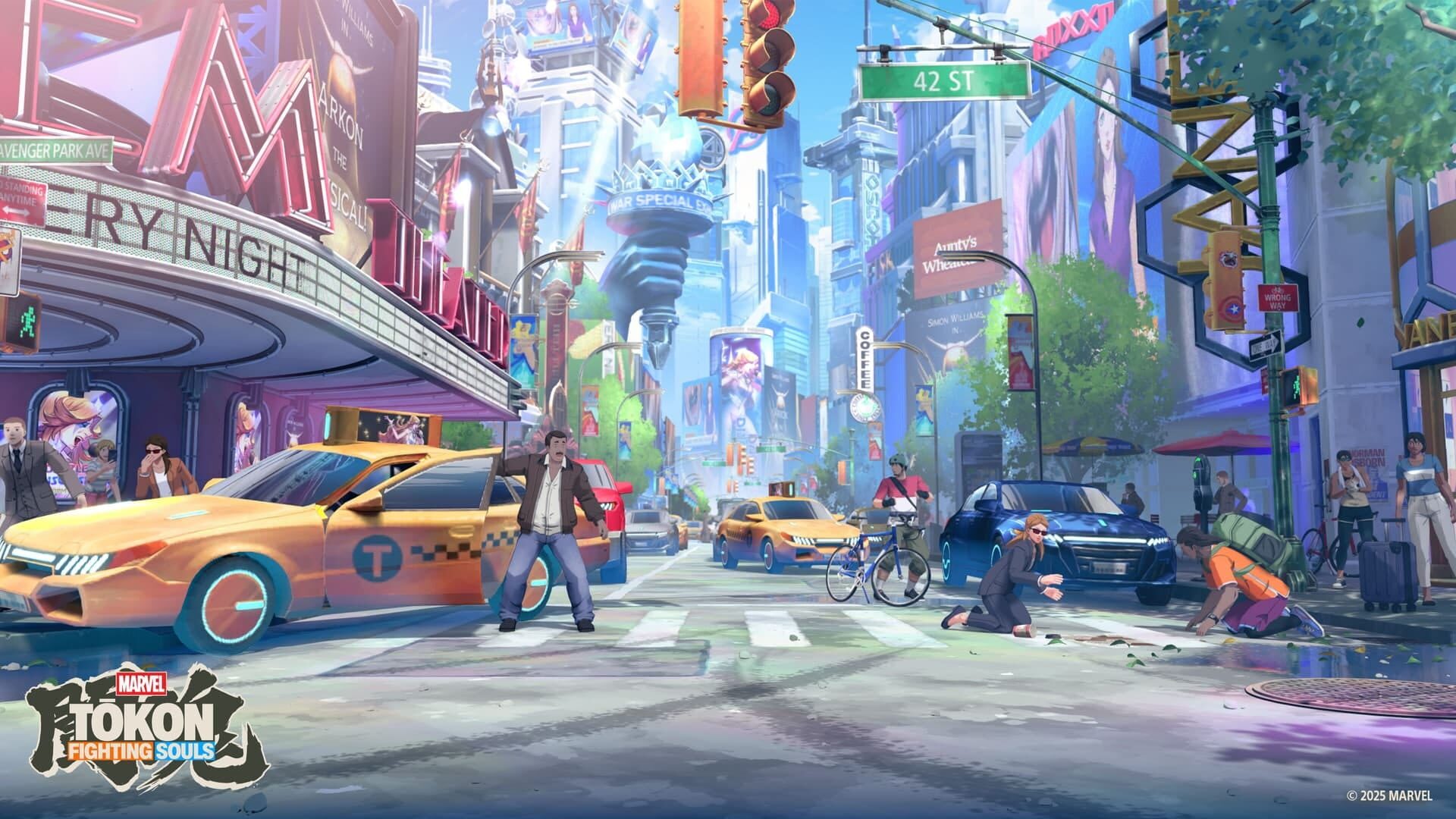
If there is one aspect of Marvel Tōkon that immediately demands attention, it is the art direction. The characters have an extraordinarily clean illustrated quality in motion, almost like exceptionally detailed cartoon drawings have been brought to life. Arc System Works has a well-established talent for making 3D models move with the character and clarity of 2D animation, and that approach suits Marvel remarkably well.
The familiar heroes and villains remain immediately recognisable, but they are not simply recreations of their comic or cinematic appearances. Tōkon gives them a distinct visual identity, combining Marvel iconography with Arc System Works’ exaggerated animation and anime influence. Attacks have weight and spectacle, character poses are full of personality, and effects fill the screen without stripping away the sense that everything has been deliberately illustrated.
The backgrounds deserve just as much attention. Stages are packed with detail rather than existing as anonymous spaces behind the fighters. Even when the characters and effects naturally dominate the foreground, there is a surprising amount to notice in the environments surrounding them. It helps make each fight feel situated inside a carefully constructed Marvel world rather than taking place in front of decorative scenery.
More Than Marvel vs. Capcom With a Different Name
Any new Marvel fighting game is inevitably going to be compared with Marvel vs. Capcom, but Tōkon benefits from not simply trying to reproduce that series. The 4v4 structure, its approach to assists and Arc System Works’ own design philosophy give it a recognisable identity of its own.
That distinction matters. Anyone approaching Tōkon specifically hoping for an unofficial Marvel vs. Capcom sequel may need to recalibrate their expectations. This is a different interpretation of what a Marvel tag fighter can be, one that places considerable emphasis on team construction while attempting to make the spectacle accessible to players who have never spent years learning competitive fighters.
The Marvel licence is also used effectively beyond simply providing a recognisable roster. Character animation and presentation communicate personality exceptionally well, helping each fighter feel like a deliberate interpretation rather than another licensed skin. With four characters on each team, however, roster breadth naturally becomes particularly important. Eight character slots can be represented in a single match, so additional fighters over time would make an already interesting team-building concept considerably richer.
The Fighting Is Clearly the Main Event
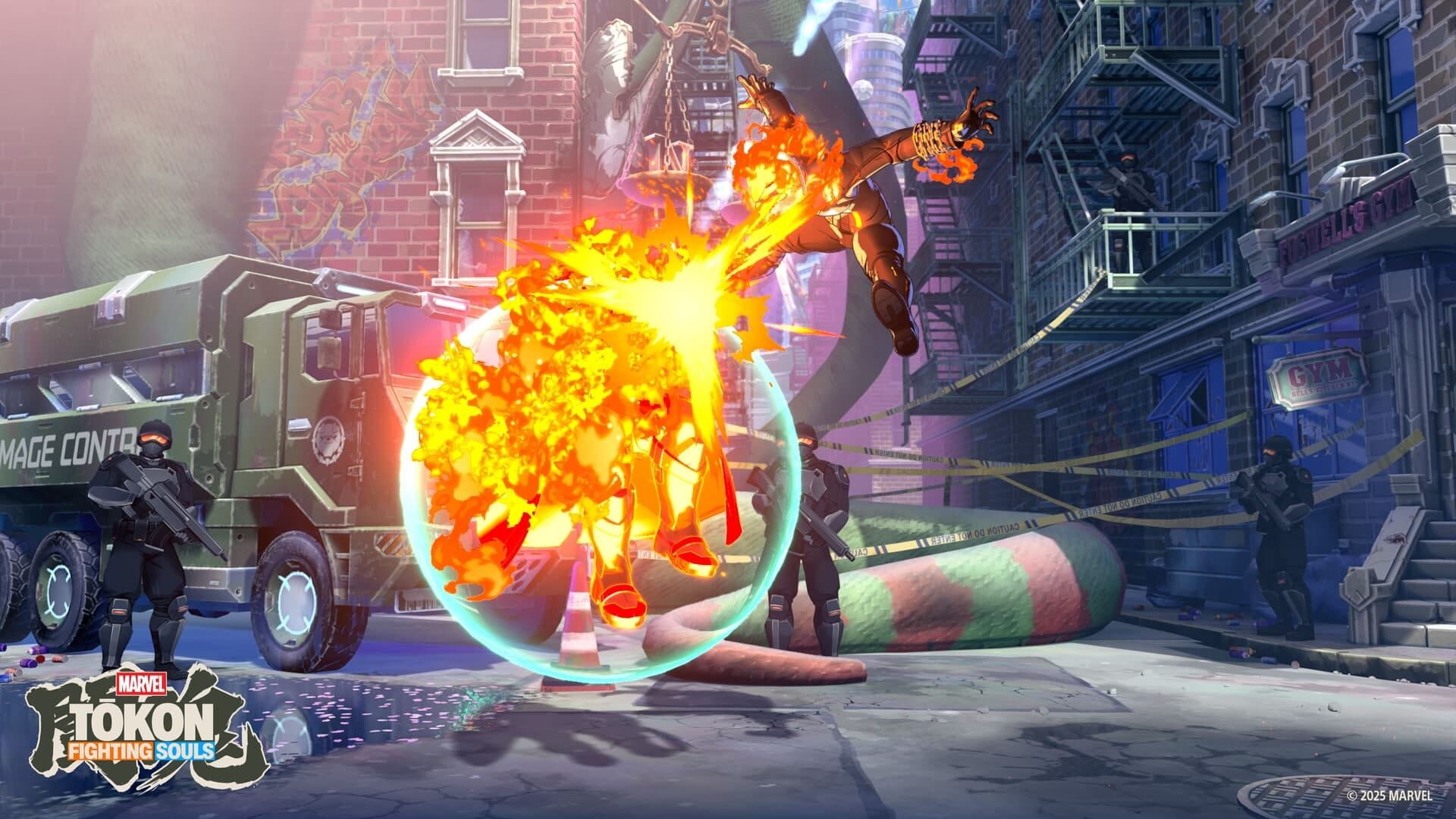
Tōkon provides structure around its battles for players who are not interested in immediately jumping into competitive matches, but the fighting itself is unmistakably the centre of the package. The additional material gives players somewhere to learn, experiment and spend time outside direct competition, although the game’s biggest ideas are all expressed through its combat systems.
That is worth considering depending on what attracts you to the Marvel name. Someone primarily looking for a substantial narrative-driven superhero adventure is not really the audience Tōkon is targeting. Its characters and presentation celebrate Marvel, but everything ultimately feeds back into being a fighting game.
For the intended audience, that focus is sensible. A fighter lives or dies on whether its underlying systems provide reasons to learn, experiment and return, and the 4v4 format creates an unusually large number of potential team relationships. The roster is already entertaining to see in action, but the format should become even more interesting as players discover combinations and, potentially, as future additions expand the available choices.
A Strong Entry Point for Fighting-Game Newcomers
One of Tōkon’s most interesting qualities is that it does not require the player to already love fighting games before it begins explaining why its systems are interesting. For someone less familiar with the genre, that is important. There is still a learning curve, and a good tutorial cannot remove the skill involved in playing against experienced opponents, but understanding what the game is asking you to do is a very different problem from actually mastering it.
Tōkon handles the first part particularly well. Its tutorial gave me a much clearer understanding of the combat than I expected going in, and the accessibility of those fundamentals makes the game considerably easier to approach. Experienced fighting-game players will naturally move beyond those lessons quickly, but newcomers are not treated as an afterthought.
There is an important limitation to that recommendation. A well-designed fighting game is still a fighting game. Players who fundamentally have little interest in competitive or tag-based fighters should not expect the Marvel licence to transform it into another genre. What Tōkon can do, and does effectively, is remove some of the unnecessary intimidation that might otherwise prevent an interested newcomer from giving its systems a fair chance.
A Spectacular Fighter With a Welcoming First Step
Marvel Tōkon: Fighting Souls succeeds most obviously through presentation. Its character art, animation and remarkably detailed stages give it an identity that stands apart even in a genre known for visual excess. This is an exceptionally attractive interpretation of Marvel, and Arc System Works’ style feels like a natural fit for superheroes built around exaggerated movement and spectacular attacks.
Its more important achievement may be how approachable that spectacle proves to be. A 4v4 fighting game sounds like something aimed squarely at experienced players, yet the tutorial and underlying design make the first steps surprisingly manageable. There is considerably more complexity waiting beyond those fundamentals, but Tōkon makes an effort to teach before it demands mastery.
It will not convert everybody who has never enjoyed fighting games, nor does it need to. For Marvel fans curious about the genre, newcomers looking for a comprehensible starting point, and established fighting-game players interested in an unusual team structure, Tōkon presents a confident and impressively polished proposition. The visuals get your attention immediately, but the care taken to make an intimidating style of game understandable is what leaves the stronger impression.


