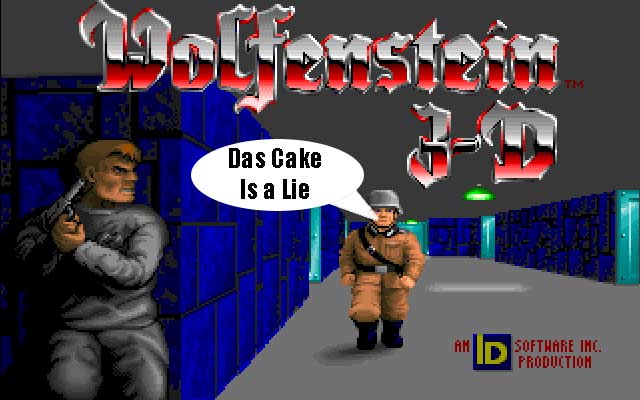
A castle full of Nazis, secret passages and experiments that have gone horribly wrong sounds like a place invented specifically to give B.J. Blazkowicz a very busy afternoon. Wolfenstein is happy to be ridiculous. Once a game puts Hitler in a mechanical suit, it has made its position on historical accuracy fairly clear.
But I think the question behind all that is worth asking: was there a real Castle Wolfenstein? Did the Nazi castle and occult business come from somewhere, or did someone simply combine the nastiest villains they could think of with a suitably creepy building?
The game’s Castle Wolfenstein is fictional. There is, however, a real German castle with a documented SS history that frequently comes up in comparisons: Wewelsburg. Understanding the difference between its history, the stories later attached to it and the origins of the games makes this considerably more interesting than calling it the real-life Wolfenstein.
The original inspiration came through a war film and an arcade game
Wolfenstein’s creative origins are more straightforward than a secret Nazi research programme. Silas Warner created the original Castle Wolfenstein for the Apple II in 1981. It was a game about infiltrating and escaping a Nazi-held castle, with stealth playing a much larger part than someone arriving from the later shooters might expect.
In a developer retrospective published by PC Gamer, John Romero traced Warner’s inspiration to the 1961 war film The Guns of Navarone and the arcade game Berzerk. The idea brought a commando-film premise together with the action of moving through hostile rooms.
That feels like a very understandable route to Wolfenstein. A fortress gives the player a reason to sneak, a reason to fight and a reason to keep looking for a way out. You don’t need an accurate reconstruction of one particular building to make that work.
When id Software made Wolfenstein 3D in 1992, it changed the pace. Romero recalled that the team experimented with features such as moving bodies and opening crates, then removed them because they interrupted the speed of the game. The series was already reshaping its premise around what felt good to play.
Wewelsburg was real, and its SS connection was real
Wewelsburg stands near Büren in Germany. Its recognisable triangular form, with a tower at each corner, dates to a rebuilding programme in the early 1600s, according to the castle museum’s history. The building existed long before the Nazis attached their own ambitions to it.
From 1933, Heinrich Himmler planned to develop it into an SS institution, initially a school for officers and later a secluded meeting place for senior SS leaders. The museum’s historical account describes alterations intended to make it look more imposing and castle-like, including deepening the moat and removing exterior plaster.
That detail is striking. Even the people occupying the actual castle were deliberately changing how it looked to serve the image they wanted to project. Architecture and symbolism were part of their attempt to present the SS as an elite with a grand historical purpose.
The construction also involved forced labour by concentration-camp prisoners. The Niederhagen-Wewelsburg camp formed part of the project, and prisoners suffered and died there under SS control. Any account of the place needs to include those people. Focusing entirely on mysterious rooms would give a deeply misleading picture of what happened.
This is the documented historical connection: an actual castle appropriated for SS ideology and ambition, with real persecution behind the building work.
The occult stories need a closer look
A castle, Himmler and strange-looking interiors provide plenty of material for a horror story. They also make it easy for a speculative claim to become an apparent fact through repetition.
Wewelsburg’s museum makes a particularly useful distinction in its exhibition guide. Work on the North Tower’s Crypt and Hall of the Supreme SS Leaders remained unfinished in 1945. The museum says there are no reliable findings establishing their intended use. A sinister-looking room cannot, by itself, tell us what ceremonies supposedly happened inside it.
The museum also addresses the later growth of these stories in its publication on Wewelsburg’s myths. Its description explains how post-war rumours about occult SS rituals became entangled with extremist fascination and popular culture. The castle’s reputation has acquired layers that need examining alongside the wartime evidence.
For me, that is where the subject becomes more interesting. There is a history of the place itself, and then a history of the frightening stories people have told about it. A game can use those stories to build atmosphere. An article claiming to explain the real origin has to distinguish them.
Nothing in that material establishes Wolfenstein’s supernatural experiments as historical events. The undead and impossible weapons belong to the fiction. Real SS ideology, symbolism and violence provide enough disturbing history without treating the games as evidence for something more.
So was Wewelsburg the model for Castle Wolfenstein?
It is an understandable comparison, especially when thinking about Return to Castle Wolfenstein and its mixture of Nazi strongholds and supernatural horror. But calling Wewelsburg the confirmed original model would go further than the evidence I could establish. I haven’t found a developer statement confirming that the game’s castle was directly based on it.
The available developer accounts give us firmer ground elsewhere. Warner’s original idea drew on a war film and an arcade game. In the same PC Gamer retrospective, Return to Castle Wolfenstein art director Maxx Kaufmann describes the team’s early pitch as a small snowy castle level, mixing an exterior, interiors and an alarm system. Those are concrete accounts of how the games took shape.
Wewelsburg helps explain why the image of an SS castle has a real historical resonance. It doesn’t establish the origins of every corridor, experiment or secret chamber in the series.
That leaves room to appreciate the invention. Wolfenstein takes the idea of getting behind enemy lines and pushes it into increasingly outrageous places. For the broader changes between games, I’ve covered the series in my history of Wolfenstein. The real-world question follows a different trail: the castle, the SS, the myths and the entertainment built around them.
I like Wolfenstein’s willingness to go completely over the top. Looking into its possible historical connections makes me appreciate how much is being invented. The games can have their monsters and mechanical villains. The real castle has its own history, and the people who suffered there deserve to remain visible when we tell it.